How to Generate Epic Anime Fights in Seedance 2.0 (Step by Step)
Learn how to generate epic anime fights in Seedance 2.0: style setup, fight choreography prompts, settings, character consistency, multi-shot chains, and native audio — with 5 ready-to-use prompts.
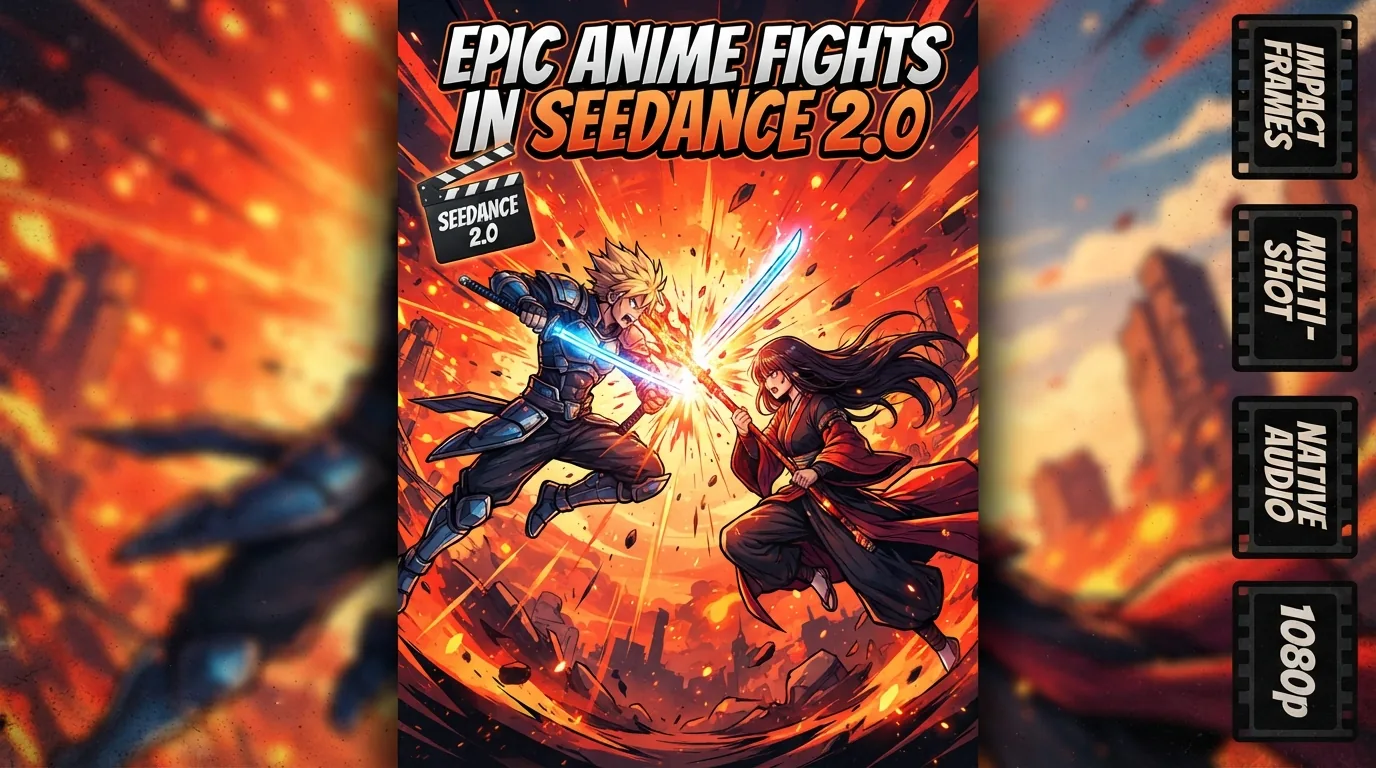
How to Generate Epic Anime Fights in Seedance 2.0 (Step by Step)
You spent an hour writing the perfect prompt. The characters look right, the lighting is right — and then the punch lands like a wet handshake.
Two fighters stand face to face, arms frozen mid-swing, and the whole clip feels like a slideshow cosplaying as animation.
That's the most common failure I see from creators moving to AI anime generation: they prompt for a scene, not for a fight. A fight is motion — anticipation, impact, reaction — and if your prompt doesn't speak that language, no model in the world will save you.
The good news: Seedance 2.0 speaks it fluently. This guide walks you through the complete workflow for generating epic anime-style fight scenes — style setup, choreography prompts, settings, character consistency, multi-shot combat chains, and native audio — so your clips land with actual weight. Follow it end to end, and you'll go from a blank prompt box to a finished, multi-shot fight sequence in about 15 minutes per shot.
Why This Guide Is Worth Your Time: Tested on Dozens of Fight Scenarios
I've spent the last several months testing Seedance 2.0's action capabilities across dozens of fight scenarios — shonen-style brawls, martial arts exchanges, mecha clashes, sword duels, and supernatural showdowns. Everything below is based on what actually works in the generator, not theory. Where a feature or spec isn't officially published by the Seedance team as of September 2026, I've labeled it clearly.
The Core Breakdown: What Makes an Anime Fight Feel Epic
Before any prompt, you need to understand the physics of anime action. A fight feels "epic" not because of what happens, but because of how motion is structured. Every great fight beat follows a three-part rhythm:
1. Anticipation — the wind-up. The crouch before the leap, the drawn-back fist, the flash of the eye. This is where tension builds. In anime, anticipation is often exaggerated: a full second of stillness before a strike that lands in two frames.
2. Impact — the moment of contact. This is where anime fights live or die. Real fights have impact frames — one or two frames of extreme distortion, a burst of speed lines, a shockwave. The harder the impact, the more the audience feels the hit.
3. Reaction — the consequence. The opponent flying backward, the dust cloud, the stumble, the recovery. Without a visible reaction, an impact reads as a miss.
This is why "motion language" matters more than visual description. A prompt that says "two samurai fight in a bamboo forest" gives the model a scene. A prompt that says "rapid punches, dodge and counter, camera whip-pan, impact frames, speed lines" gives the model a choreography. The second one is what generates epic anime fights in Seedance 2.0.
Rule of Thumb: If your prompt describes only what the fighters look like, you'll get a static tableau. If it describes what the motion does — wind-up, strike, reaction, camera — you'll get a fight.
Step-by-Step: The Complete Anime Fight Workflow in Seedance 2.0
Here's the full recipe, from style to final edit. Each step builds on the last.
Step 1: Set Up the Anime Style (Anchored, Not Generic)
Seedance 2.0 handles anime aesthetics well, but you have to be explicit — "anime" alone is too broad. Anchor your style with a short style block at the start of your prompt:
That block is the seedance 2.0 anime style anchor: short, explicit, and identical across every shot of a sequence.
Then pick a style direction that matches the fight you want:
| Style Direction | Best For | Style Block to Add |
|---|---|---|
| High-energy shonen battle anime style | Punchy, fast-paced brawls with exaggerated motion | high-energy shonen battle anime style, exaggerated motion, bold outlines |
| 90s cel animation aesthetic | Retro, hand-drawn feel with visible line work | 90s cel animation aesthetic, hand-drawn look, film grain |
| Modern digital anime | Clean, crisp, current broadcast look | modern digital anime, clean line art, vibrant colors |
| Soft painterly anime | Emotional, slower, atmospheric duels | soft painterly anime, watercolor backgrounds, gentle lighting |
One note on style references: describe the aesthetic, not the franchise. Prompts that reference specific copyrighted studios' or characters' designs wholesale can produce derivative output and create rights problems if you monetize. "High-energy shonen battle anime style" gets you 90% of the look without the legal baggage.
Step 2: Lock In Character Consistency With References
The #1 complaint in AI fight scenes is characters morphing mid-clip — face changes between punches, hair color shifts between shots. Seedance 2.0's reference system fixes this, and it's the difference between a demo and a deliverable.
The generator supports a reference system of up to 12 files, using tags to tell the model what each reference is for:
- @Image — character faces and designs. Upload a reference image of each fighter's face so the model keeps them consistent across shots.
- @Video — motion and choreography references. Upload a short clip of a fight or action sequence you like, and the model borrows its movement patterns.
- @Audio — audio references (more on this in Step 6).
For a two-character fight, a strong setup looks like:
This is the core of seedance 2.0 character consistency in fights: the same reference images carried through every shot of a multi-shot sequence, so fighter A in shot 1 is recognizably fighter A in shot 4.
Rule of Thumb: If a character changes appearance between shots, the fix is almost never a better prompt — it's the same @Image reference attached to every shot in the sequence.
Step 3: Write the Choreography Prompt (Motion Verbs, Not Adjectives)
This is the heart of seedance 2.0 action prompts. Structure your prompt in three parts: style block → action block → camera block.
The action block is where motion language lives. Build it from verbs and camera terms, not adjectives:
- Strikes:
rapid punches,flying kick,uppercut,elbow strike - Defense and flow:
dodge and counter,block and push back,sidestep - Impact:
impact frames,shockwave on hit,speed lines,screen shake - Camera:
camera whip-pan,fast zoom-in,low angle shot,camera follows the strike
A complete fight prompt looks like this:
Notice what's there: style, action verbs, impact language, camera direction. Notice what's not there: a paragraph describing costumes and backstories. The model renders detail; you direct motion.
Step 4: Choose the Right Settings (1080p, 5–10s, Seedance 2)
Settings decide whether your fight looks like a fight or a blur. For action, motion quality is everything, so this is where you don't cut corners.
| Setting | Recommendation | Why |
|---|---|---|
| Resolution | 1080p | Fights are detail-heavy — speed lines, impact frames, facial reactions. 720p smears them. |
| Clip length | 5–10 seconds | A single exchange reads best in 5–10s. Longer clips drift and lose choreographic focus. |
| Model | Seedance 2 over Fast | For fight scenes, motion quality matters more than speed. Seedance 2 gives you the cleaner motion; Fast is for quick drafts and iteration. |
Credit costs (as published on the pricing page) give you a sense of the trade-off:
- Fast, 5s, 720p: 73 credits
- 5s, 720p: 90 credits
- 5s, 1080p: 224 credits
- 15s, 1080p: 673 credits
A 5-second 1080p fight shot at 224 credits is the sweet spot for quality per credit. If you're iterating on choreography, draft at Fast/720p (73 credits) and only spend the 1080p credits once the motion is right.
Step 5: Chain Multi-Shot Combat Sequences (One Shot = One Beat)
A single clip is a moment. A fight is a sequence. Seedance 2.0's multi-shot feature lets you chain shots into a continuous combat sequence — attack → counter → impact — which is how you build actual fight scenes instead of isolated punches.
The workflow:
- Generate shot 1 (the attack) with your choreography prompt.
- Generate shot 2 (the counter) with the same style block and character references, describing the next beat of the fight.
- Generate shot 3 (the impact) as the payoff — the hit, the reaction, the dust settling.
Keep the style block and @Image references identical across all shots. Change only the action block. That's the seedance 2.0 multi-shot action pattern: same world, same characters, advancing choreography.
Rule of Thumb: One shot = one beat. Attack, counter, impact — three beats, three shots. Don't try to cram a whole fight into a single clip.
Step 6: Generate Native Audio (No Sound Design Pass Needed)
Here's where Seedance 2.0 separates itself from most text-to-video tools: it generates native audio with the video. For fight scenes, that means impact sounds, whooshes, and even dialogue come out of the generator — no separate sound design pass required.
When you generate a fight clip, the audio is baked in: punches land with a thud, dodges carry a whoosh, the camera whip-pan has its own airy sweep. If you want to steer the audio, add it to the prompt: impact sounds on every hit, whoosh on the dodge, heavy footsteps on the rooftop.
You can also use the @Audio tag in the reference system to influence the sound design with a reference clip — useful if you want a specific sonic texture.
Step 7: Edit for Impact (Speed Ramping + Impact Frames)
The generator gives you the raw material; the edit is where it becomes a fight scene. Two moves matter most:
- Speed ramping. Slow the anticipation, then speed up the strike. A punch that takes 0.5s of screen time feels faster if the 0.3s before it is slowed to 1.5s. Most editors (CapCut, Premiere, DaVinci) do this with keyframes.
- Impact frames. Cut to a single-frame or two-frame flash at the moment of contact. This is the classic anime trick — the screen goes white or the frame distorts for one frame, and the brain registers a massive hit.
Then drop your music bed under the native audio. The generated impact sounds sit naturally under a track, and the whooshes keep the fight feeling physical even when the music swells.
5 Ready-to-Use Anime Fight Prompts (Copy, Paste, Generate)
The workflow only pays off if you can apply it fast — so here are five complete seedance 2.0 action prompts, ready to copy. Adjust the character names and setting, and generate. Each uses the full workflow: style block, motion language, camera direction, and audio cues.
1. Shonen Duel (high-energy shonen battle anime style)
2. Martial Arts Exchange (90s cel animation aesthetic)
3. Mecha Battle (modern digital anime)
4. Sword Fight (soft painterly anime)
5. Supernatural Clash (high-energy shonen battle anime style)
Troubleshooting: Why Your Fight Scenes Look Wrong
Even with the right workflow, some fights come out wrong. When one does, diagnose in this order — symptom, root cause, resolution:
Symptom: "The motion looks stiff and static."
Root cause: your prompt describes a scene, not motion. Resolution: rewrite the action block with motion verbs — rapid punches, dodge and counter, impact frames, speed lines — and add a camera move. If it's still stiff, switch from Fast to Seedance 2; the faster model trades motion quality for speed, and fights are where that trade hurts most.
Symptom: "My characters morph between shots." Root cause: no reference images, or different references per shot. Resolution: attach the same @Image reference for each character to every shot in the sequence. This is the seedance 2.0 character consistency fix — references, not prompt luck.
Symptom: "The fight feels too slow."
Root cause: the prompt has no tempo language. Resolution: add rapid, fast, quick succession, and shorten the clip to 5 seconds. Long clips default to slower pacing. Also check your settings — a 15s clip at 1080p costs 673 credits and often reads slower than a tight 5s exchange.
Symptom: "The style looks generic, not anime."
Root cause: "anime" alone is too weak a style signal. Resolution: use the full style block — anime style, 2D animation, cel shading — plus a direction like high-energy shonen battle anime style or 90s cel animation aesthetic. The more specific the aesthetic, the less generic the output.
Symptom: "The audio doesn't match the action."
Root cause: audio wasn't prompted. Resolution: add audio cues to the prompt — impact sounds on every hit, whoosh on the dodge — or use an @Audio reference clip to steer the sound design.
Rule of Thumb: When a fight clip fails, fix the motion language first, the references second, and the settings third. In that order. Most failures are prompt problems, not model problems.
Which Prompt Style and Settings for Which Fight?
The workflow above assumes one fight. But not every fight wants the same treatment — here's the decision framework:
| Fight Type | Style Direction | Clip Length | Model | Why |
|---|---|---|---|---|
| Fast brawls, shonen-style exchanges | High-energy shonen battle anime style | 5s | Seedance 2 | Short clips keep the pace frantic; motion quality matters most |
| Martial arts, technique-focused | 90s cel animation aesthetic | 5–10s | Seedance 2 | Hand-drawn feel rewards visible technique and held stances |
| Mecha / heavy impact | Modern digital anime | 5–10s | Seedance 2 | Clean line art keeps mechanical detail readable at 1080p |
| Sword duels, dramatic | Soft painterly anime | 10s | Seedance 2 | Slower, atmospheric pacing suits longer clips |
| Quick drafts and choreography tests | Any | 5s | Fast | 73 credits per draft; iterate cheap, then upgrade |
Rule of Thumb: Fast model for drafts, Seedance 2 for finals, 1080p for anything you'll publish, and 5 seconds for anything you want to feel fast.
Verify Before You Commit: 5 Free Generations
Before you spend credits on a full sequence, run one cheap test. You don't need a plan to test this workflow — Seedance 2.0 gives you 5 free generations with no card required, exactly enough to run the full pipeline once:
- Generate one 5s 720p fight clip with the shonen duel prompt above.
- Check the motion: does the punch land? Is there a reaction?
- Check the style: does it read as anime, or generic 3D?
- Check the audio: do the impacts land with the hits?
If those checks pass, the workflow works for you, and you can invest credits in 1080p finals and multi-shot sequences. If they don't, adjust the motion language before you spend anything.
FAQ
Still have questions? These are the ones I get most often:
Can Seedance 2.0 do anime style?
Yes. Seedance 2.0 handles anime aesthetics well when prompted explicitly — use the full style block (anime style, 2D animation, cel shading) plus a direction like high-energy shonen battle anime style or 90s cel animation aesthetic. A bare "anime" prompt produces generic results.
How do I keep characters consistent in a fight? Use the reference system. Attach the same @Image reference for each character to every shot in a sequence — the generator supports up to 12 reference files with @Image, @Video, and @Audio tags. Consistency comes from references, not from prompt repetition.
What prompts make fight scenes dynamic?
Motion language: rapid punches, dodge and counter, impact frames, speed lines, shockwave, plus camera direction like camera whip-pan and fast zoom-in. Describe what the motion does, not just what the scene looks like.
How long should fight clips be? 5–10 seconds. A single exchange reads best at 5s; slower, more atmospheric duels can stretch to 10s. Longer clips drift and lose choreographic focus — chain multiple shots instead of extending one.
Can it generate fight sound effects?
Yes. Seedance 2.0 generates native audio with the video, including impact sounds, whooshes, and dialogue. Prompt audio cues explicitly (impact sounds on every hit) or use an @Audio reference to steer the sound design.
What are the best settings for action? 1080p for detail, 5–10s clips, and Seedance 2 over Fast — motion quality matters more than render speed for fights. Draft at Fast/720p (73 credits) and generate finals at 1080p (224 credits for 5s).
How do I chain multiple fight shots? Use the multi-shot feature. Generate attack → counter → impact as separate shots, keeping the style block and @Image references identical across all of them, and changing only the action block. One shot = one beat.
Use It Responsibly
One last thing before you publish: a few guardrails worth following:
- Don't copy copyrighted characters or studios' specific designs wholesale. Describe aesthetics — "high-energy shonen battle anime style," "90s cel animation aesthetic" — rather than naming franchises or characters. This keeps your output original and your rights clean.
- Respect rights on your references. Only upload @Image, @Video, and @Audio references you have the right to use. A reference you don't own can drag rights problems into everything you generate from it.
- Get the commercial license for monetized content. If you're publishing fight scenes on YouTube, selling clips, or using them in client work, the Pro plan (9.9/mo, 260 credits) is for personal experimentation; the Max plan ($29.9/mo, 790 credits) is the fastest tier with permanent storage.
Core Summary
Here's everything in one place:
Epic anime fights are built from motion, not description — and Seedance 2.0 gives you every tool to generate them: anime style blocks, reference-based character consistency, motion-language prompts, multi-shot chains, and native impact audio.
- Style:
anime style, 2D animation, cel shading+ a direction (shonen battle, 90s cel, modern digital, painterly) - Consistency: same @Image references on every shot
- Choreography: motion verbs + impact language + camera moves
- Settings: 1080p, 5–10s, Seedance 2 for finals
- Sequences: one shot = one beat; chain attack → counter → impact
- Audio: prompt impact sounds and whooshes; they generate with the video
- Verify: 5 free generations, no card required
Rule of Thumb: motion language first, references second, settings third.
Your first epic fight is five free generations away — start with the shonen duel prompt at 5 seconds, 720p, on the Fast model: open the generator, paste the prompt, and generate. Check the pricing page when you're ready to go beyond the free tier.
More Posts
Seedance 2.0 vs Sora 2: Which AI Video Model Should You Use in 2026?
Seedance 2.0 vs Sora 2 compared head to head: motion realism, native audio, pricing transparency, commercial rights, and which model fits your workflow in 2026.

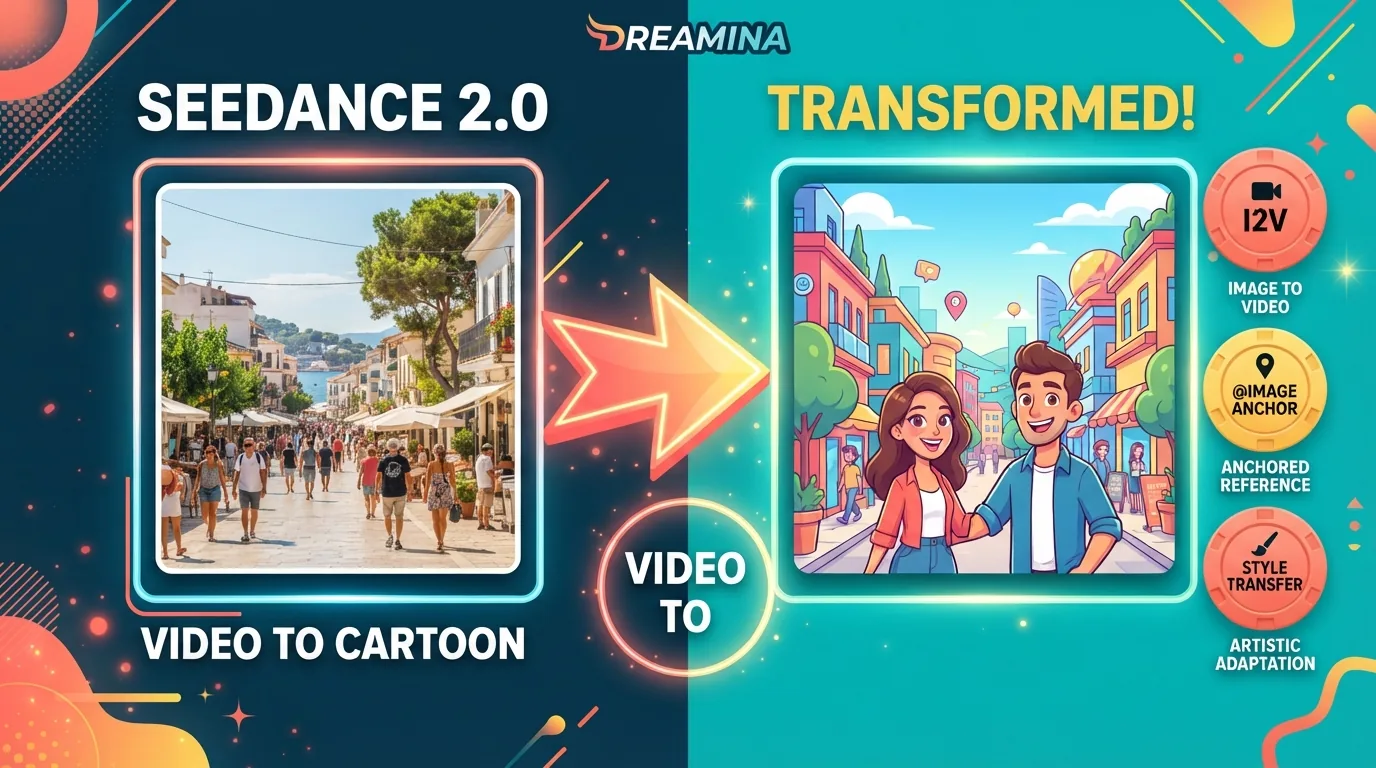
How to Use Dreamina Seedance 2.0 to Convert a Video into a Cartoon (Step by Step)
Two working paths to turn a filmed video into a cartoon with Seedance 2.0: the Dreamina route and the Seedance 2 Pro generator route. Step-by-step prompts, credit costs, and fixes for flicker and morphing.
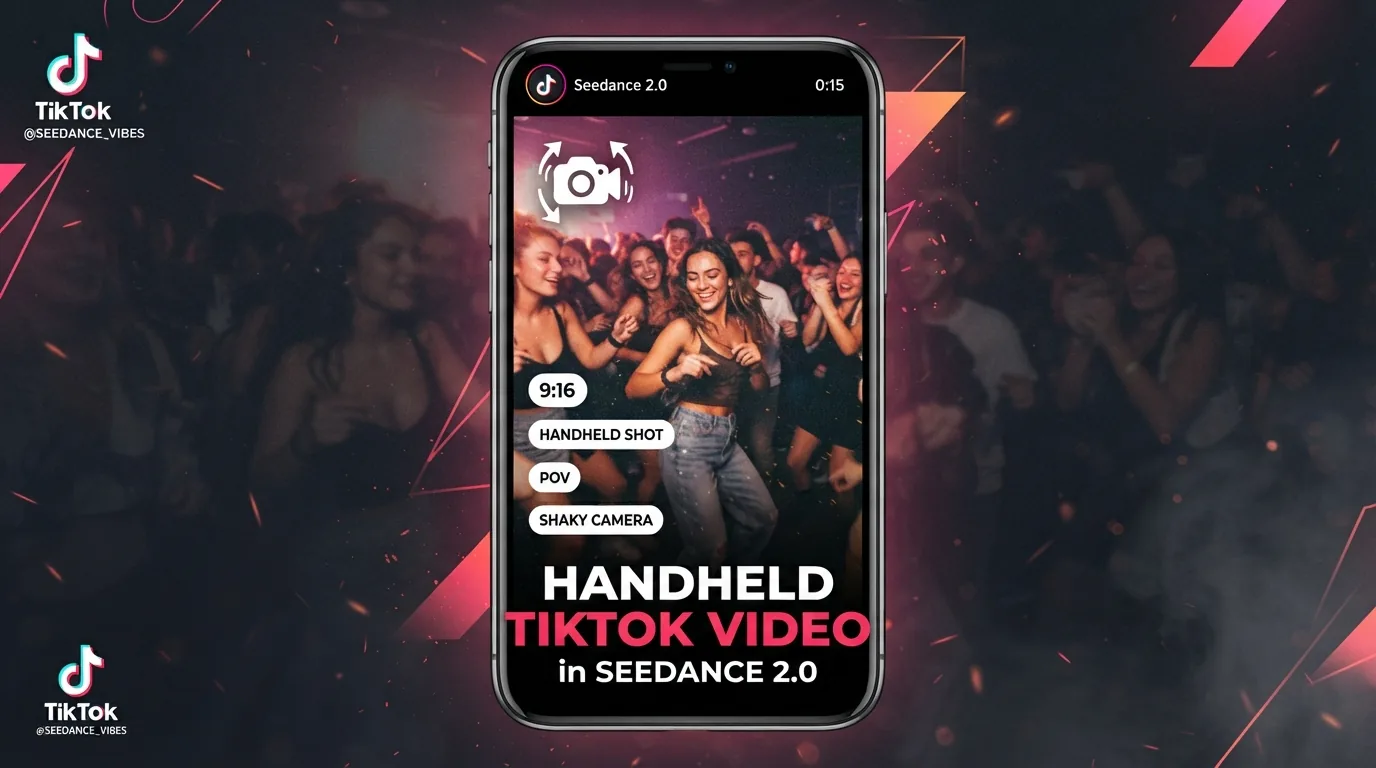
How to Create Handheld TikTok-Like Video in Seedance 2.0 (Step by Step)
Learn how to create handheld TikTok-like video in Seedance 2.0: camera-motion prompts, the 9:16 settings recipe, @Video references, 5 ready-to-use prompts, and troubleshooting.
Newsletter
Join the community
Subscribe to our newsletter for the latest news and updates